What Happened to Jordan Harbinger and Art of Charm
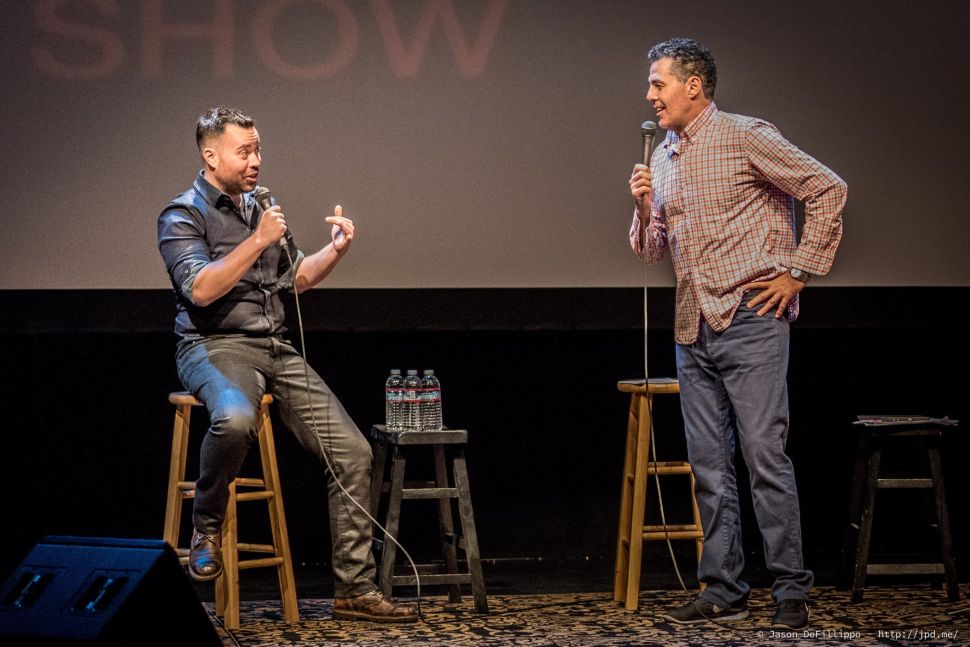
Hashemite kingdom of jordan Straw'south outset piece of communication on podcasting is: "Don't do it."
If yous want to become into podcasting to promote something, make a cadet or considering it feels like the adjacent virtual space where your make needs a presence, Mr. Harbinger advises staying out. The only reason to get into a medium like podcasting is considering you lot savour recording and yous have the delivery to deliver real value to listeners.
Jordan Harbinger co-founded The Art of Amuse with A.J. Straw. It's a podcast devoted to personal evolution. Lots of guys come to the podcast looking for help with dating (if that'southward you, cheque out their toolbox episodes), but the podcast really pushes its listeners to remember about going beyond dating, to learn how to attract friends, business organization partners and allies. The team aims to make a bear witness about living your best life.
Self-help has always been big business, but we reached out to Mr. Harbinger to talk about the business of the podcast itself, to learn what he thinks well-nigh the new developments in this medium. The evidence has been running for eight years at present, which makes it ancient in podcast terms. It also doesn't fit easily into the public radio fashion that has done so much to ascertain what the new converts to podcasting think about the medium.
This continues our occasional series on the business side of podcasting. We previously spoke to John Lee Dumas, host of theEntrepreneur on Burn podcast, and Gretchen Rubin, of theHappier podcast.
The following phone call with Mr. Harbinger and the show's producer, Jason DeFillippo, has been edited and condensed:
I know that your company does a few things, like coaching, events and the podcast. Did the podcast come start?
Hashemite kingdom of jordan Harbinger: Yes. I used to work at a law firm on Wall Street. I had a summertime acquaintance position. I got hired past this partner who was never in the office, fifty-fifty though he was a top level partner. I was trying to outwork my officemates, and it was impossible. A lot of them were smarter than me and had that intense bulldoze. I was like, 'I'm screwed, they are going to burn me, I don't belong here.'
The partners who hired us were supposed to mentor us and mine was M.I.A., merely one day I was out with him for coffee, and he said, 'Ask me annihilation y'all want.'
I said, 'How come you make more money than the other partners, merely yous're never in the office?'
And, he put his easily on the table and said, 'Let me tell you, I bring in all the business. I bring in all the relationships. I bring in all the key clients. And so I'chiliad more valuable outside the part than within the office.'
I institute that he was bringing multi-1000000 dollar deals regularly to the firm because he was hanging out with the right people. And I said to myself, 'Holy crap, I can not only acquire how to exercise that, but if I don't, I'm probably screwed.' Then I focused on that for the side by side 10-plus years.
And and so from there, I met my business organization partner, A.J., who was a cancer biologist. And then we started talking about networking and stuff similar that and he was similar, 'I'm interested in that as well.'
Basically, the podcast started off as mine and AJ'southward conversations that we were having at bars that we were having during the solar day and night well-nigh networking and trying to see people, where we were trying to figure out the tips and tricks that we were figuring out. And also reading a agglomeration of pop psychology into the subject area, scientific studies and we were trying to put them to practical use. And what nosotros constitute is a lot of what we were reading worked, but wasn't fully explored. So we tried to expand on that cognition.
And other stuff that we were reading was complete bullcrap and had conspicuously never actually been tried by the authors of these self help books. And so we started mythbusting, also. And that's what eventually led to the Art of Charm training program. People and companies were coming to united states and asking us to teach what we were talking about to their teams. And this was eight years agone.
And so that's like aboriginal history in podcast time.
H: Yep. We started podcasting in 2006.
'It would accept been actually discouraging if I was measuring myself or measuring the worth of the business organization based on how many people found united states in iTunes that week'
That'south really early on. That was during the commencement wave for podcasting. Why did yous exercise a podcast? Why didn't yous do a weblog?
H: We never said, 'We're going to do a media matter.'
It was never similar that. I was going out and trying this networking stuff, and meeting up with A.J. every single nighttime. And we were going out and trying all these different things. And people started to notice. So there were guys that would be a bartender at 1 bar and on their off nights they'd exist hanging out with us. And the doormen at this place would desire to hang out with united states of america after. We started meeting these influential types in our hometown of Ann Arbor.
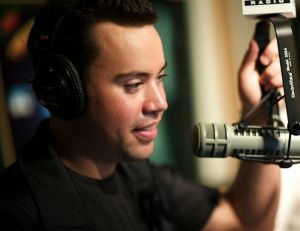
People eventually started to realize 'Wait a minute, you guys never pay for drinks. You go gratuitous food after the kitchen closes from the chefs.' They asked us if we could teach them. They noticed we were doing something but couldn't quite wrap their heads around it. They would say, 'I just noticed that your quality of life is pretty high.'
I 24-hour interval A.J. said, 'There'due south this thing called podcasting. It'southward brand new.' And then we set up in his basement, and nosotros were talking. We'd exist recording in Garageband one.0, or whatever the hell programme was effectually and so. And I would edit the audio. And we would upload it to essentially a crappy server that wasn't designed for streaming.
There was no podcast apps back so. You had to download it inside iTunes. It was a huge pain in the butt, but people still did it. We eventually kind of grew upward with podcasting. At the time when no one was listening, we were getting expert at the craft.
Did you eventually join i of the early podcasting hosts, similar Libsyn? Were they important to help yous guys grow?
H: Nosotros basically were not on anything.
DeFillippo: When I came in we had a plug-in that was written for WordPress to do our own advertizing insertion, and everything was hosted on Amazon S3. We'd basically regenerate everything each week, so we could have new ads in every former prove. Nosotros basically ran everything kind of internally. But kind of hodgepodged together.
Then later on a while it made more sense to movement to Libsyn.
'Here's something nobody talks about: quondam advertisers often come back to us saying the quondam ads are yet converting'
So when did the bear witness move from a hobby to a business?
H: I want to say 2013 was kind of when I was like, 'You know, I can treat this more seriously. It'south working to convert to business.'
And that'southward what we started doing. It's been three or four years. So people ask me if I wished we had treated it like a business from the kickoff? Aye and no.
Yes, because I would have gotten more than deliberate practicing and I would have been really expert at this and I would have been able to really grow and then much better in what I'm doing.
But, frankly, I bet our downloads were static if not decreasing for the first several years. It would take been actually discouraging if I was measuring myself or measuring the worth of the business based on how many people plant usa in iTunes that week. Audience growth is a black box. Dorsum and then, no background, no budget, we would have been totally screwed. I would have quit a long time ago.
When did you sell your showtime ads?
H: We sold some earlier, but never seriously until 2014, and it was actually hard. We had an ad agency, which we begged to be role of, only it delivered very footling. I eventually left them for PodcastOne. They sold a ton of ads. We don't have enough room for all the ads they sold. They hustle like crazy, and they don't have on very small shows. So they are able to service everybody.
Are y'all guys doing dynamic advertizing? You guys definitely have some evergreen content.
H: We quit that about three years ago, because it'due south a huge pain to do that, and we found that advertisers (at least the ones we're working with), they aren't ownership back catalog [Annotation: old shows that are even so bachelor for download].
D: Yep, they wait at back catalog as a dainty to accept, but not a must take. They care about iv weeks out. It'due south not a selling point to have former ads, and then nosotros simply leave them.
'If you desire your podcast to be good, you lot can't fake it, you can't outsource it … The applied science can't still even come close to leveling the playing field.'
Tin't you automate that?
H: We invented that stuff. We invented that in 2008. Nosotros were the first people in the entire world to have dynamic advertising insertion on their podcasts, but the reason we don't practice that anymore is considering, honestly, it doesn't make whatsoever money.
So I idea, how virtually I simply leave the old advertisers in there, considering here's something nobody talks about: old advertisers often come up back to us saying the erstwhile ads are still converting.
What happens if y'all take their advert out just to earn a couple grand? No new campaign.
We've had people abolish advertising campaigns with us years ago and and so come back and say, 'Those links are even so converting.' They think our audition is viscous. Then it would be ROI-negative for u.s.a. to insert dynamically into the back catalog.
Dynamic advertising is not in the interest of the podcasters themselves a lot of time. It's just the advertising company pushing it for a little extra money. And, honestly, if PodcastOne thought they could be making coin off of dynamic advertizement insertion, they would be pushing u.s. on it. But they aren't, which makes me think that they don't see the ROI either.
In terms of podcast applied science, ane feature a lot of podcasters and tech companies talk virtually is phone call to action features in the player (such as Satchel, which the Observer previously reported). So, for example, an ad could exist played and a user could click a button on their phone to take advantage of an offer, rather than entering in a word, for example. Are yous guys looking at stuff similar that?
D: No, no i is even talking to us near that.
That means you lot have to accept your phone in your hand ready to go. Near people when they are listening to podcasts are either in their automobile, working out or walking. They are not going to be able to pull out their phone and do a call to activeness right so.
H: People pitch us on players, but the problem is, I'd have to be like, 'If you're listening to this on Random Podcast Player on your iPhone or Android, push the screen now.' Why am I going to drive people to your app then I can make $xx? No thank you. Brands need to drive this.
If you want your ads to convert ameliorate, button Apple on having a meliorate app. Effigy out who has the largest market share, they'll incorporate this functionality when people are going to utilise it. Today, if you put a clickable link in your show notes, you tin click information technology. You couldn't before. At present everybody does information technology.
Has anything actually grabbed yous guys in terms of podcast engineering science?
D: As far as the recording side goes, Zencastr is the just one that's looking like information technology'south going to be a expert tool. Information technology's always a pain to Skype. Zencastr is yet a little complicated and it'south notwithstanding really buggy. When they become there human activity together, we're going to exist using them, but that's the simply affair that'southward been interesting.
When you expect at it, podcasting is an RSS file with an MP3 download. It'south non rocket science.
H: It's one of the things I like best nigh podcasting. People oftentimes invite me to speak well-nigh podcasting, especially considering my whole thing is, 'Don't do information technology.' Information technology'due south trendy and yous're wasting your fucking fourth dimension. If you start a blog, and you get sick of doing it, yous hire a writer and they write equally you and nobody knows, nobody cares. Y'all want to calibration content? Rent three writers.
If you want your podcast to be expert, you lot can't fake information technology. You tin can't outsource it. You can rent 25 producers, the quality is going to marginally better, simply mostly the same, because you lot're the one doing interviews. Yous've got to broadcast. You've got to have the personality, the drive. The technology tin't yet fifty-fifty come up close to leveling the playing field.
Early days, y'all had to be somewhat techie to be a blogger, and so anyone who could write could be a blogger. Then people got sick of blogs, and the only people who made money off of blogging were people who gave real value.
Podcasting? Kind of going in the same direction. Except nosotros're in the middle of it now. Back in the day, information technology wasn't too sexy to podcast, so a lot of the content was tech-based, it was all dudes in the audience. Now, the audition is huge, except we're in that stage where everybody wants their ain podcast.
Marking my words, two or three years from now, it'due south going to be the but people who are nonetheless podcasting are hobbyists and people who have figured out how to requite enough value to monetize the show.
Considering everybody else who idea they were going to get rich quick volition have figured out information technology was bullshit, and it'due south not going to happen. 
0 Response to "What Happened to Jordan Harbinger and Art of Charm"
Postar um comentário